At Emerald Coast Public Relations Organization (ECPRO)’s Lunch & Learn in June, guest speaker Jen Higgins of Thrive People Services prepared attendees to identify the monsters (or difficult personality types) that haunt the workplace. She also provided the professional version of Ghostbusters-style human resources tactics to effectively remediate the chaos and frustration that ensues.
The summer Halloween-themed presentation made an uncomfortable topic very memorable–and best of all, humorous. Higgins introduced the five antagonists that lurk in the workplace, ready to “haunt” employee retention:
The Zombie: “Not dead, just not invested.”
The Energy Vampire: “They don’t bite, they drain.”
The Ghost: “Here today, gone when it matters.”
The Drama Werewolf: “Calm until chaos.”
The Web Weaver: “Gossip is the web, trust is the catch.”
Undoubtedly, you’ve met or are managing one or all of these bad actors at work. And whichever creature is roaming your halls, Higgins's central warning applies to all of them: "What you tolerate becomes your culture."
Good Employees Flee the Monsters
In a Gallup survey on the reasons why U.S. employees left their jobs in 2024, 37% reported leaving for “Engagement and Culture,” and 31% for “Wellbeing and Work-Life Balance.” Combined, these accounted for 68% of job departures, compared with the remaining 32%, who left due to “Pay and Benefits” (16%), leadership (9%), and other reasons (7%).
This means employees are four times more likely to leave their jobs due to dissatisfaction with culture and work-life balance than due to compensation.
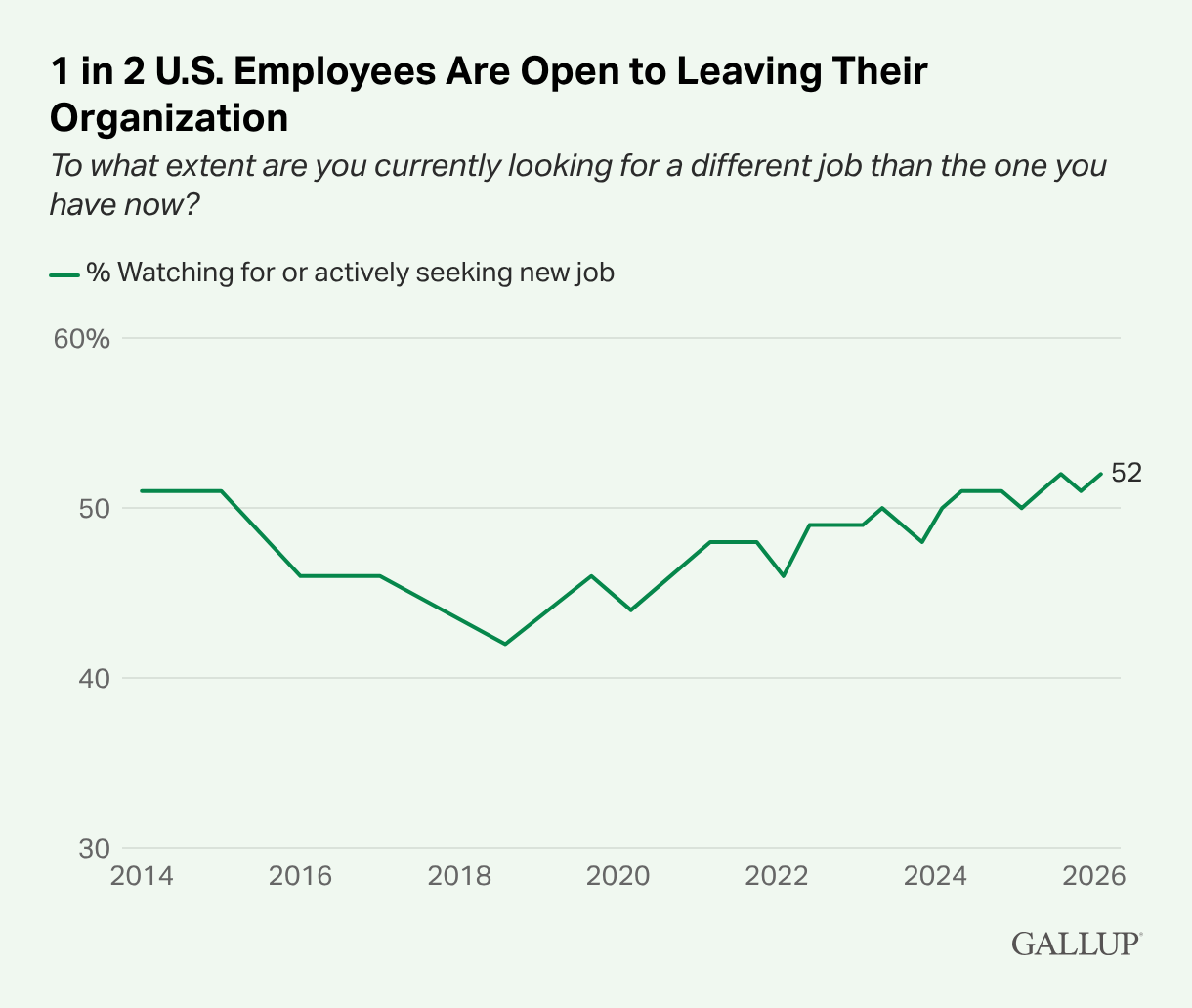
Source: Gallup Indicators. “Employee Retention & Attraction.”
In early 2026, 52% of U.S. employees (one in two) were open to leaving their jobs, which represents a significant cost to a small business’s bottom line.
“Gallup estimates that the replacement of leaders and managers costs around 200% of their salary, the replacement of professionals in technical roles is 80% of their salary, and frontline employees 40% of their salary.”
Notably, 42% of employees who voluntarily departed their jobs in late 2023 reported that their employers could have done something to prevent them from leaving.
This data suggests that employers are tolerating increasingly monstrous behavior, leading good employees to leave the workplace. By not addressing disengaged, negative, avoidant, emotional, or manipulative employees, high performers compensate for their bad teammates, while the workplace culture becomes toxic. The monsters stay, and a good work culture quickly erodes.
Neutralizing the Monsters
What you tolerate becomes your culture, but so does what you address early on. Here are five strategies for neutralizing the monsters in the workplace and retaining the good employees:
Conduct regular ‘stay’ interviews. In addition to exit interviews, consider holding proactive, structured meeting discussions to engage employees and gather their input to identify opportunities for improvement–before they consider a voluntary departure.
Diagnose the problem before disciplining. Difficult behavior may be a symptom of burnout, lack of motivation, stalled career path, unclear expectations, or personal issues unrelated to the workplace. Addressing the root cause of a behavioral issue may resolve a problem that a written warning could not.
Make individual accountability visible across the organization. This eliminates doubt and prevents high performers from over-compensating for the weakest team members.
Co-develop a clear career path within the organization. This signals that your company is invested in the employee’s professional development, career interests, and corresponding compensation. Remember, it is much more expensive to lose a valuable employee than to offer a path to promotion commensurate with growth.
For companies with limited budgets, consider outsourcing your human resources function to support employee engagement and retention. This provides unbiased support at a fraction of the cost of a full-time HR hire, engaging employees, soliciting feedback, and developing an actionable plan.
"Who you gonna call? Ghostbusters!"
The earlier the employee intervention, the cheaper the fix, and the more likely you are to transform the difficult employees and keep the good ones standing next to them.
For the complete creature-by-creature field guide, Jen Higgins of Thrive People Services offers the full presentation to organizations ready to do some professional ghostbusting of their own.
The scariest monster in any workplace is the one leadership has decided to live with — and it only keeps its power as long as no one turns on the lights.
Related Articles