Three Lessons From Honeybees for the Workplace and Democracy
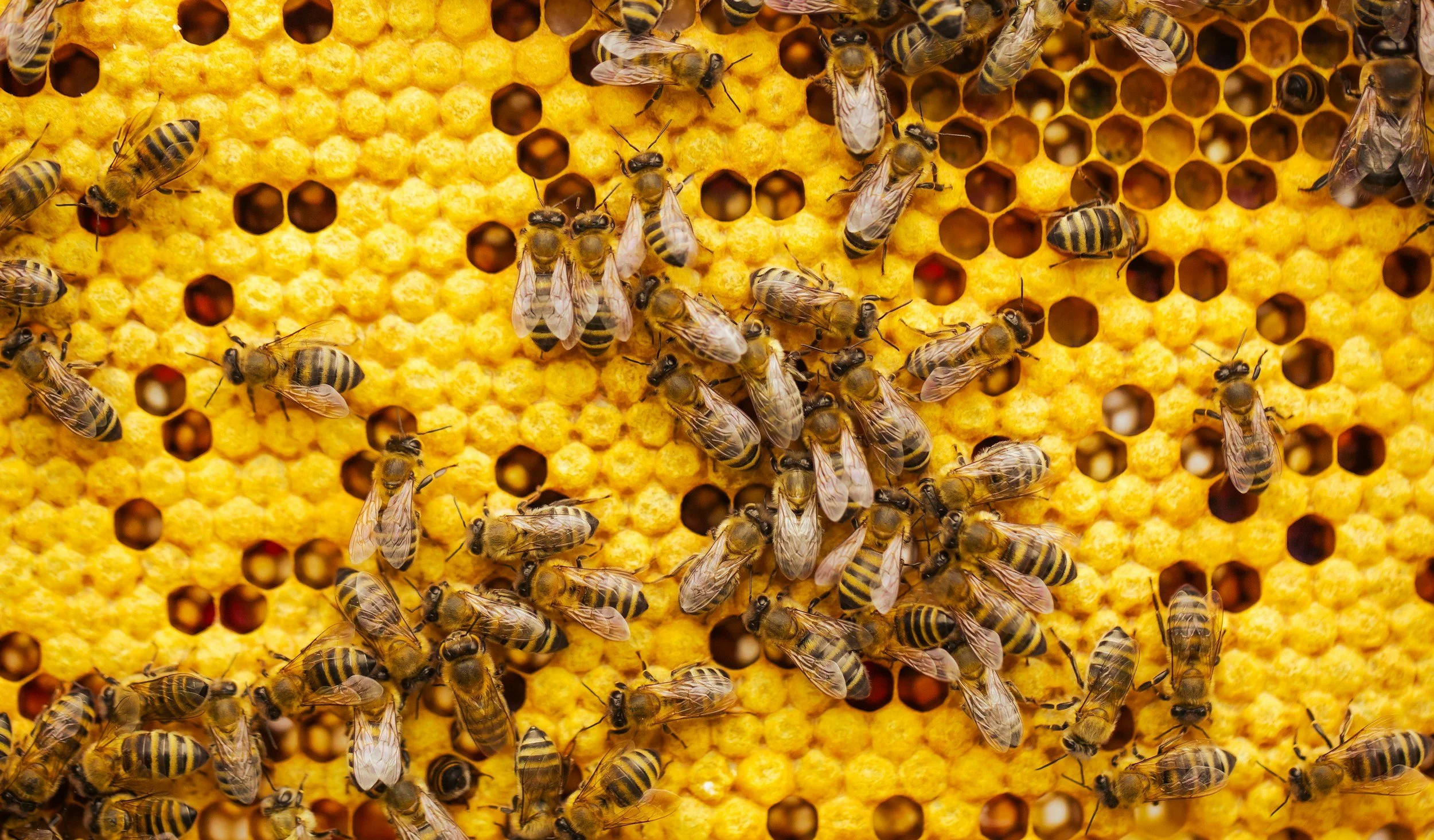
In the 2026 midterm elections, an estimated 250 million American citizens aged 18 and older can cast their ballots. Long before polling places existed, honeybees developed a functioning system for making high-stakes group decisions.
Cornell University biologist Thomas Seeley spent 15 summers studying how swarms choose their homes. In his 2010 book, “Honeybee Democracy,” Seeley argues that the “bees’ decision-making process is … a perfectly democratic endeavor, one in which the power is evenly diffused among all the scout bees in the swarm.”
How the Swarm Decides
When a honeybee colony outgrows its hive, the queen leaves with thousands of worker bees, and the swarm clusters on a nearby branch. Hundreds of female scouts fly out as far as five kilometers or more (at least three miles) to inspect potential sites and return with reports, showing their excitement through waggle dancing. The better the site, the longer and more vigorously they dance.
The enthusiastic waggle dances encourage other scouts to inspect the site for themselves. If a scout agrees it's a good site, she dances for it too, based on her own assessment. Over a day or two, support converges on one site. Once a quorum of roughly 15 to 30 scouts gathers there at the same time, they signal the swarm to prepare for flight. According to Seeley’s studies, the swarm chooses the best available site about 90% of the time, and the queen plays no role in the decision.
Three Lessons From the Swarm
In “The Five Habits of Highly Effective Honeybees (and What We can Learn From Them),” an excerpt from “Honeybee Democracy,” Seeley applies lessons for human groups, which we’ve condensed to three for business applications.
Build a diverse coalition with shared purpose, guided by an impartial leader. Assemble enough diverse individuals who share interests and mutual respect to meet the challenge. An open-minded, impartial leader minimizes their influence on the group’s collective choice. In his studies, Seeley found that a “democratic group can vastly outperform a despotic individual.”
Explore all the options independently and debate openly. After investigating a potential new home site, the scout bee returns to the swarm and reports her findings with a waggle dance to “put an option on the table for further consideration.” At work, advocate for evidence-based ideas, and fact-check claims firsthand before committing to a decision. Open debate of ideas and findings allows group wisdom to aggregate. As in the midterms, “voting by secret ballot is the best way to know our true collective judgment on an issue.”
Establish a quorum, not unanimity, for “cohesion, accuracy, and speed” in decision-making. Through waggle dancing, communication spreads quickly through the swarm, allowing it to prepare for flight once a quorum forms, before every scout agrees. At work, decide in advance how much agreement you need to move forward, so decisions don’t stall waiting for unanimity.
Be a Good Scout
A swarm needs its queen, but not to make its decisions. It needs every scout to do her part: explore the options, verify the claims, and report factually. We can do the same in business — and at the polling place. Learn about what's on your ballot, fact-check what you hear and read, engage in good-faith debate, and cast your vote. The hive is counting on you.
Source: Thomas D. Seeley, “The Five Habits of Highly Effective Honeybees (and What We Can Learn From Them),” excerpted from “Honeybee Democracy” (Princeton University Press, 2010).