
Reputation, Reach, and Relevance: How Robots Are Redefining Results
Lessons From the 2026 Southern Public Relations Federation “PR Roots” Conference in Tuscaloosa, Alabama

In late September, I attended the Southern Public Relations Federation's 2026 "PR Roots" conference in Tuscaloosa, Alabama, filling a notebook with various ink colors. Six sessions later, one theme kept surfacing: how audiences find, trust, and remember organizations is changing faster than most of our habits. Here's what small businesses, nonprofits, and creatives can implement now.
If Your Audience Moved, Follow Them
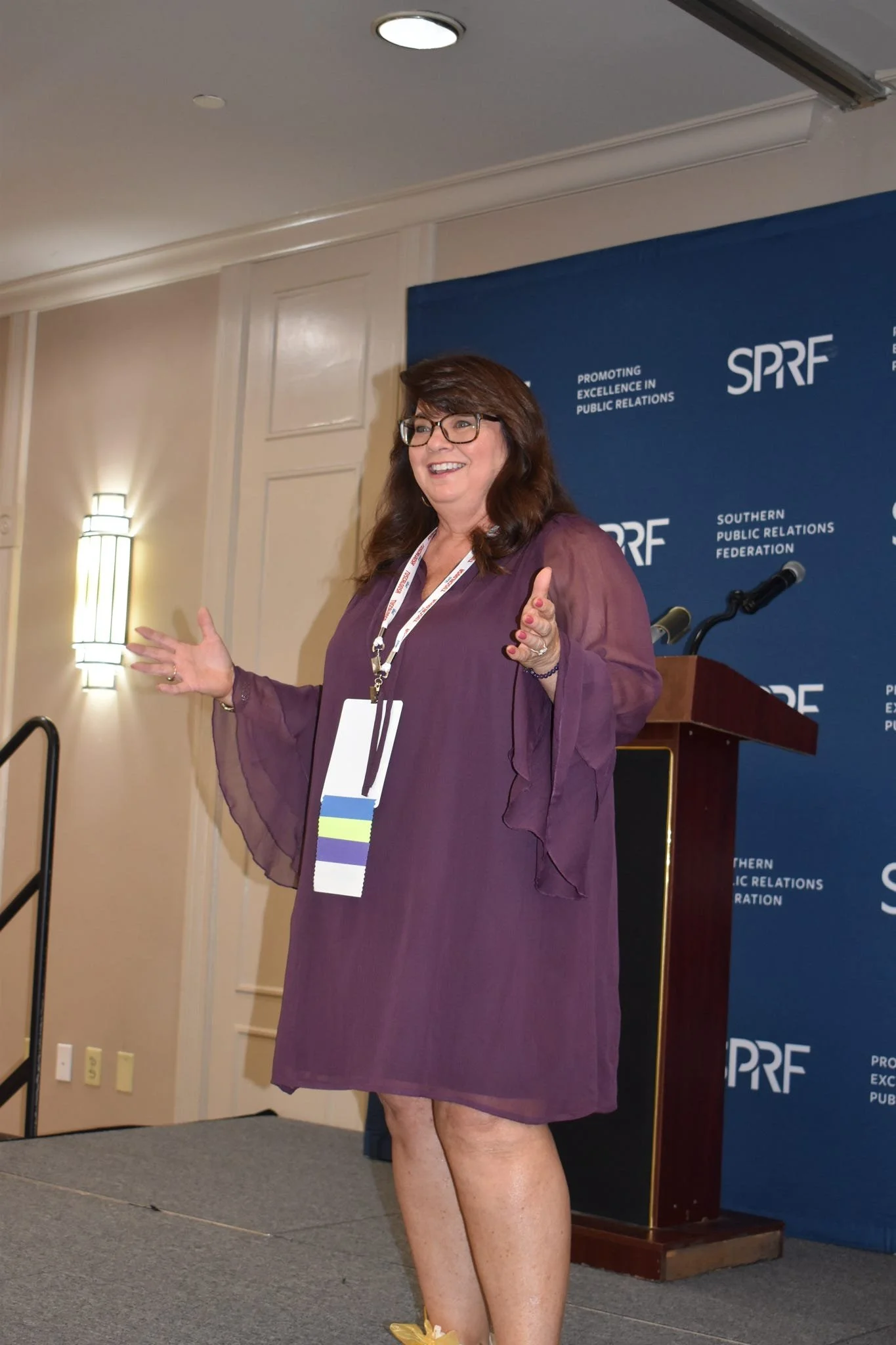
Rebecca Todd Minder | Photo by Reagan Paulus
Rebecca Todd Minder, a co-host of Alabama Heritage magazine's "Coffee & History" podcast, described what she calls "the mailbox moment." If your audience's habits change but your delivery doesn't, you have a connection problem, not a content problem.
She argued that your audience didn't necessarily stop caring about your content; they just stopped looking where you've always been present. In Minder's case, a younger demographic of prospective readers wasn't waiting at the mailbox to read the latest quarterly issue of Alabama Heritage.
Minder’s podcast, which added value and offered expanded content, introduced a print magazine to new listeners, who then visited the website, read articles, and subscribed. The real return of the podcast, she argued, isn't just clicks and downloads. It's awareness, relationships, readers, advocates, and relevance that transition listeners to subscribers.
For many businesses, their audiences have moved to AI search.
AI Search Runs on Earned Media, Which Makes PR More Valuable
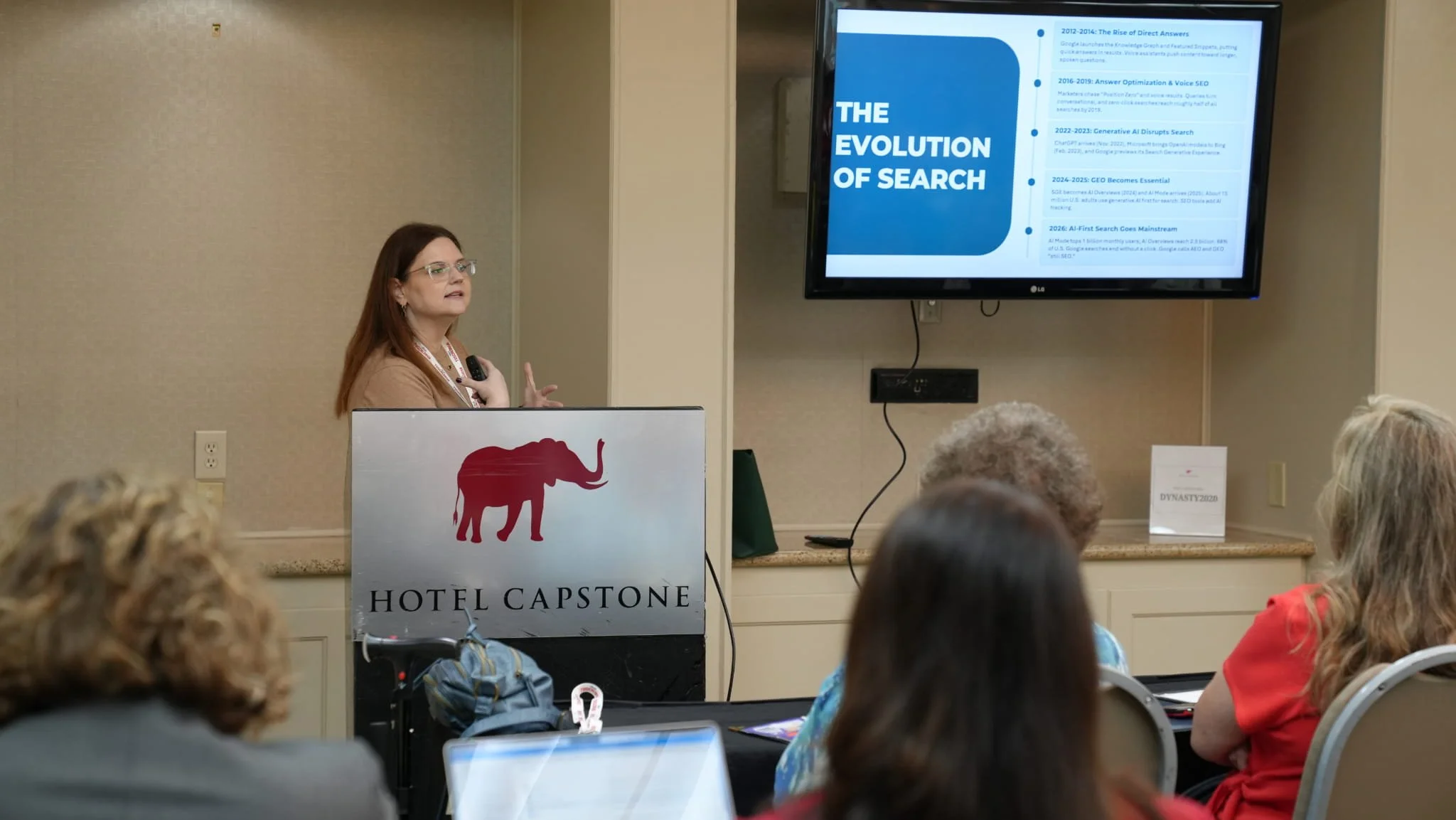
Robin McKinney | Photo by Sarah LaBorde
Robin McKinney's session, "The Robots Are Coming for Your Clicks," put numbers behind what's driving AI search prioritization. Google reports that its AI Overviews reach more than 2.5 billion people a month, and AI Mode has passed 1 billion monthly users.
In June, Reuters reported that Sensor Tower estimates show ChatGPT's app has surpassed 1 billion monthly active users. Zero-click searching, where people get their answer without visiting a website, is now the norm, so your company's brand reputation is increasingly shaped within the summarized AI answer rather than on your website. McKinney argued that an “AI-first” mentality is not just a technology fad; it’s fundamentally changing consumer behavior and disrupting the digital playing field for brands.
What does AI trust? Muck Rack's May 2026 study of more than 25 million AI citations found that 84% come from earned media, 27% from journalism, and just 0.3% from paid content. Because AI pulls from many sources at once, consistency across every place your business appears online matters.
Because good PR practices are more important than ever, McKinney provided a blueprint for success:
Publish unique, original, expert content with a real voice;
Ensure your pages are crawlable and indexable;
Keep Google, Apple, and Bing business listings up to date;
Invest in high-quality images and video;
Cultivate third-party reviews and authentic media coverage;
Create accessible website designs; and
Measure results in Google Search Console, which rolled out a search generative AI performance report for websites worldwide as of Aug. 31, 2026.
Her best-practice advice for teams adopting AI tools is to form a cross-functional governance committee and set the rules before implementation, not after.
Translate Expertise Into Earned Media
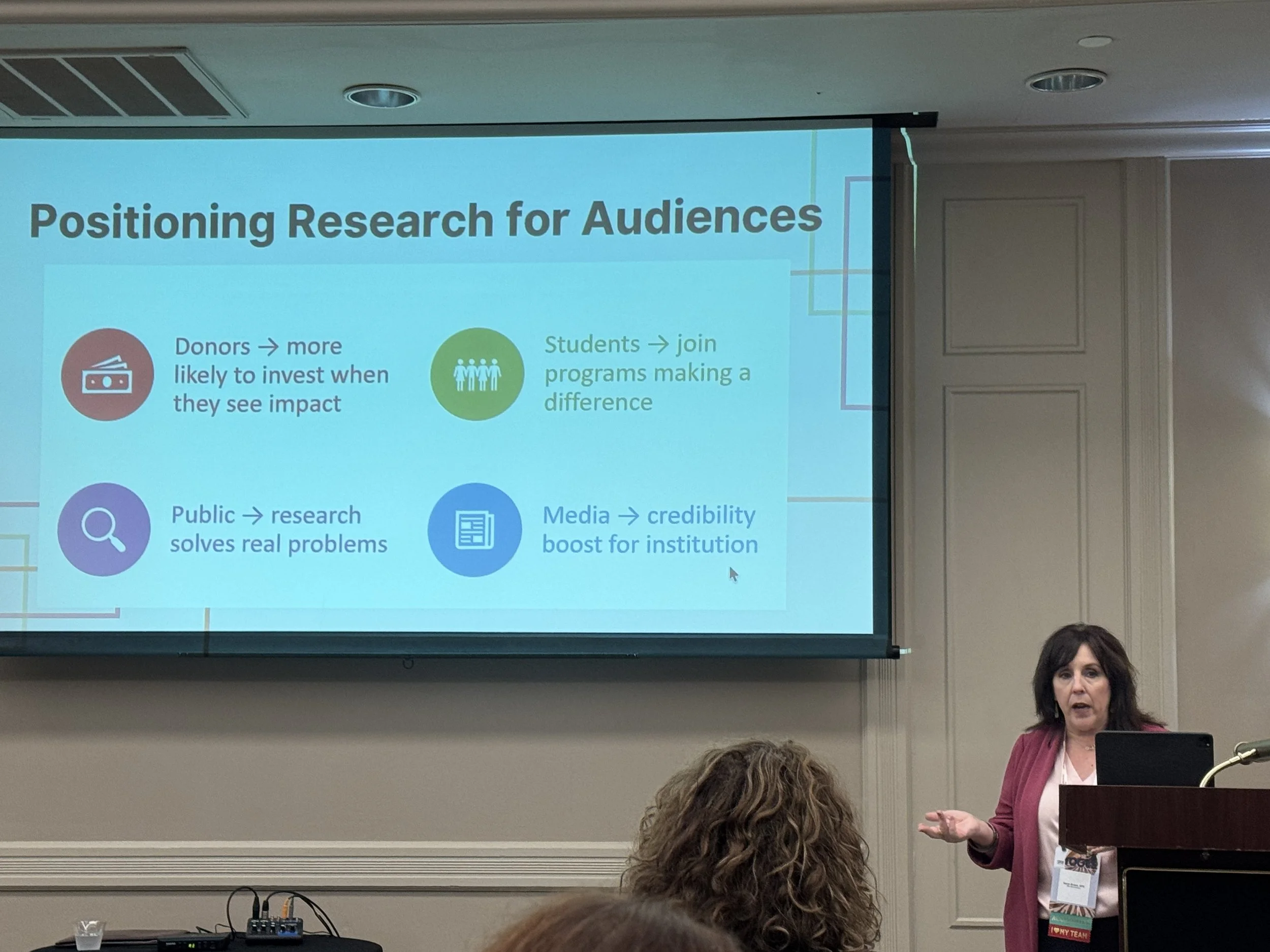
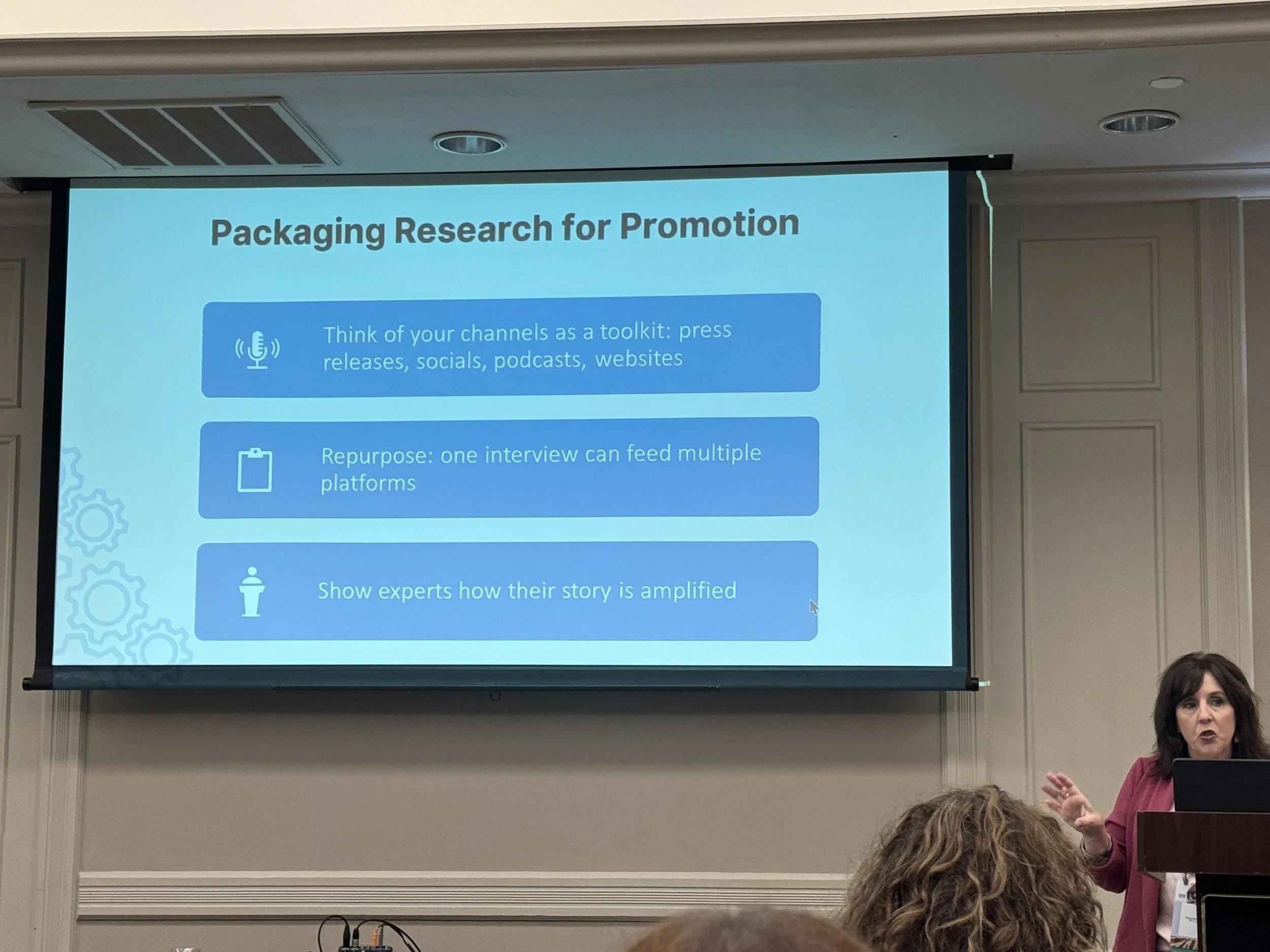
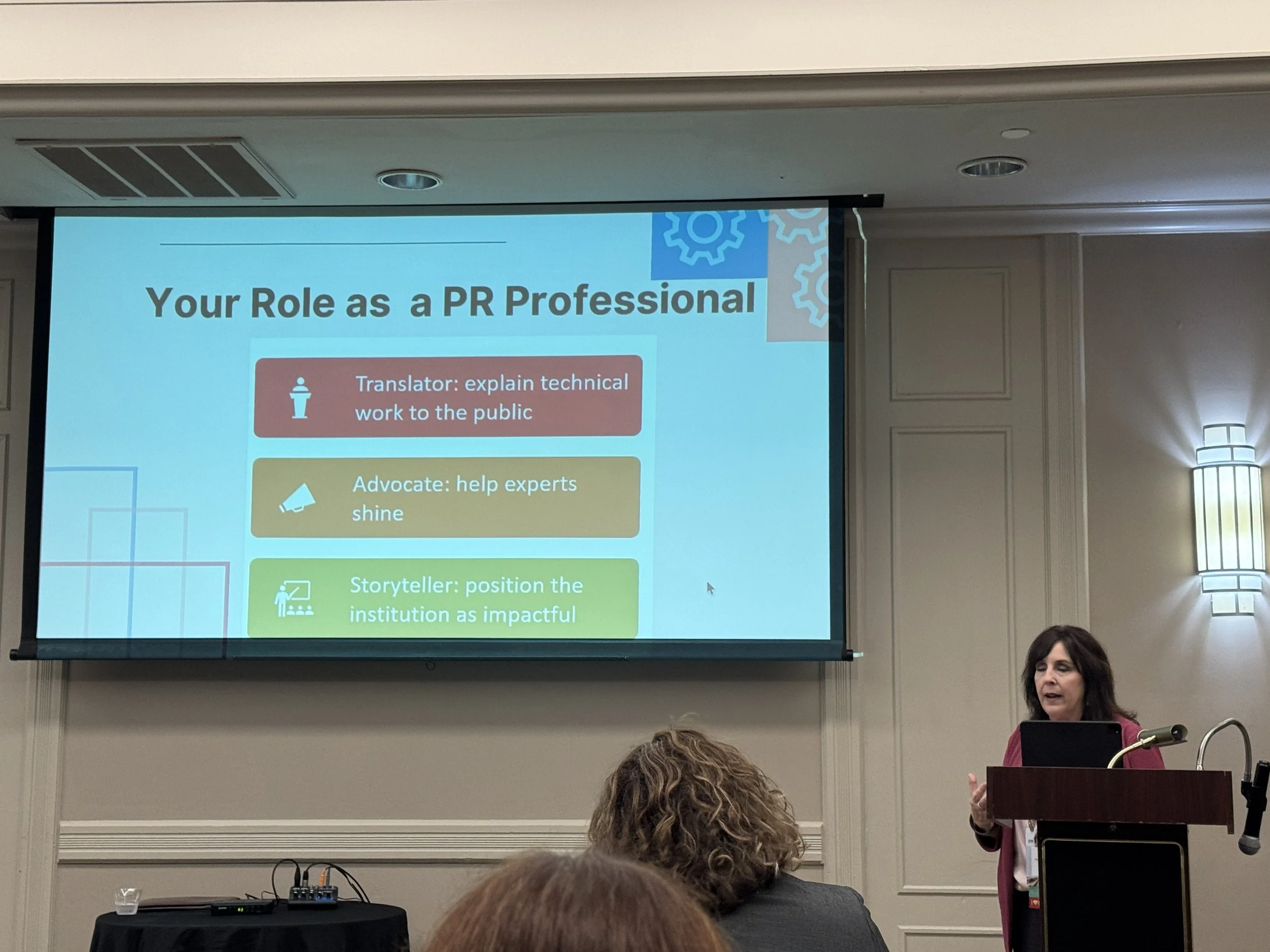
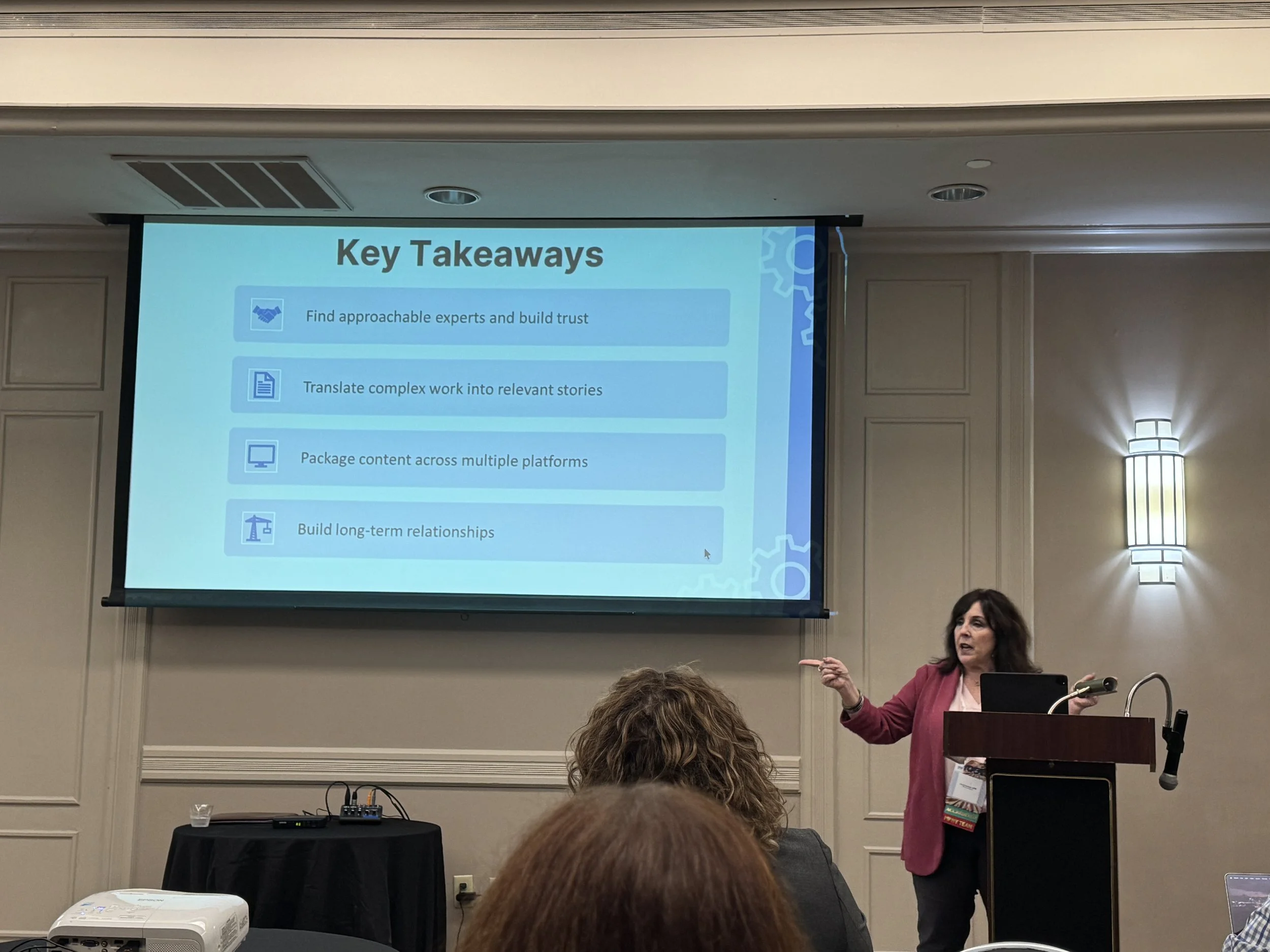
If AI leans most heavily on earned media, the next question is how to earn it.
Karyn Brown, Sam Kealhofer, and Sarah Nicholas of Mississippi State University's College of Arts and Sciences described their PR role as bridging the gap between the university's research experts and the public, serving as translators, advocates, and storytellers.
The team translates inaccessible academic jargon into plain language, using analogies and everyday examples to shape the perceptions of donors, current and prospective students, and alumni, and to show why the research matters to them.
The PR team recommended finding the right experts who are passionate communicators and building relationships with them early on, before you need to share their story. Communicators should also keep their fingers on the pulse of the news and watch for awards, grants, and media mentions.
Finally, repurposing one interview across every channel and showing the experts how far their story has traveled earns their willingness to participate in the next project. The same approach works for any business with a technical expert at its core, from dentists to engineers.
When the public understands that research solves real-world problems, and the media pick up those stories, the institution and the brand gain credibility.
Podcasting Needs a Plan, Not a Studio

Paul Katool, Mississippi Department of Transportation (L) and Paul Wolf, Visit Jackson (R) | Photo by Sarah LaBorde
One of the most flexible channels for repurposing that content is podcasting, which adds personality and emotion to what would otherwise be ordinary text.
Podcast hosts Paul Wolf of Visit Jackson ("Soul Sessions") and Paul Katool of the Mississippi Department of Transportation ("The Extra Mile") shared practical lessons for those who are planning to start a podcast:
With today's advances in podcasting distribution and editing software, you don't need to buy a fortune's worth of equipment up front. A good USB microphone and a pair of headphones are enough to get started.
Before you start, develop a comprehensive distribution plan for your podcast across social media, your website, video, and ads.
A podcast episode length of about 20 minutes is the commuter sweet spot. According to Wolf, "Less is more, unless you have a really great guest interview."
Record an "episode zero" trailer to help a new show pass review on major platforms, especially Apple.
Give every episode its own dedicated page on your branded website with show notes and a full transcript, for accessibility and for search.
Consider adding video distribution on YouTube to your audio podcast. "The Extra Mile" found video drew roughly five times the traction of audio. Long-form video can also be repurposed into short clips for social media platforms.
Procuring the basic equipment is the easiest part of starting a podcast. The plan to get each episode in front of listeners and promote it across all your available channels is what makes a podcast successful.
Generational Divides Are About Tempo, Not Values

Dan Farkas | Photo by Sarah LaBorde
Dan Farkas's keynote speech argued that workplace divides stem from tools, technology, and tempo, not professional values, which span generations. Since every generation is digitally distracted, Farkas argued, "Look for ways to reach people where they are. Isn't that what PR is?"
His practical suggestions to empower teams in multi-generational organizations included:
Reverse mentorship: Look for cross-generational collaboration opportunities and pair younger employees with older ones for mutual learning (e.g., technology, social media, and institutional knowledge).
Focus on skills: Organize mixed-age teams based on skills and diverse experiences.
Create flexible work arrangements and social events: Accommodate varying stages of professional development and preferences, and meet demographic and psychographic needs.
Create Once, Publish Everywhere (COPE): Apply this content strategy to internal communications, and set clear protocols for each channel, such as email and instant messaging.
Promote open dialogue and adapt feedback: Create spaces for open dialogue about generational differences to build understanding and adapt to different generational feedback preferences.
Record institutional knowledge: Create engagement and build cross-generational connections by audio-recording institutional knowledge before it walks out the door.
Concluding with a rhetorical question and reminder, Farkas said, "How do we empower teams to answer their own questions? What's obvious to you probably isn't to others.” He also exclaimed, “We’re in the ideation business!” He added that teams need to create options to choose from.
Storytelling Ties It All Together
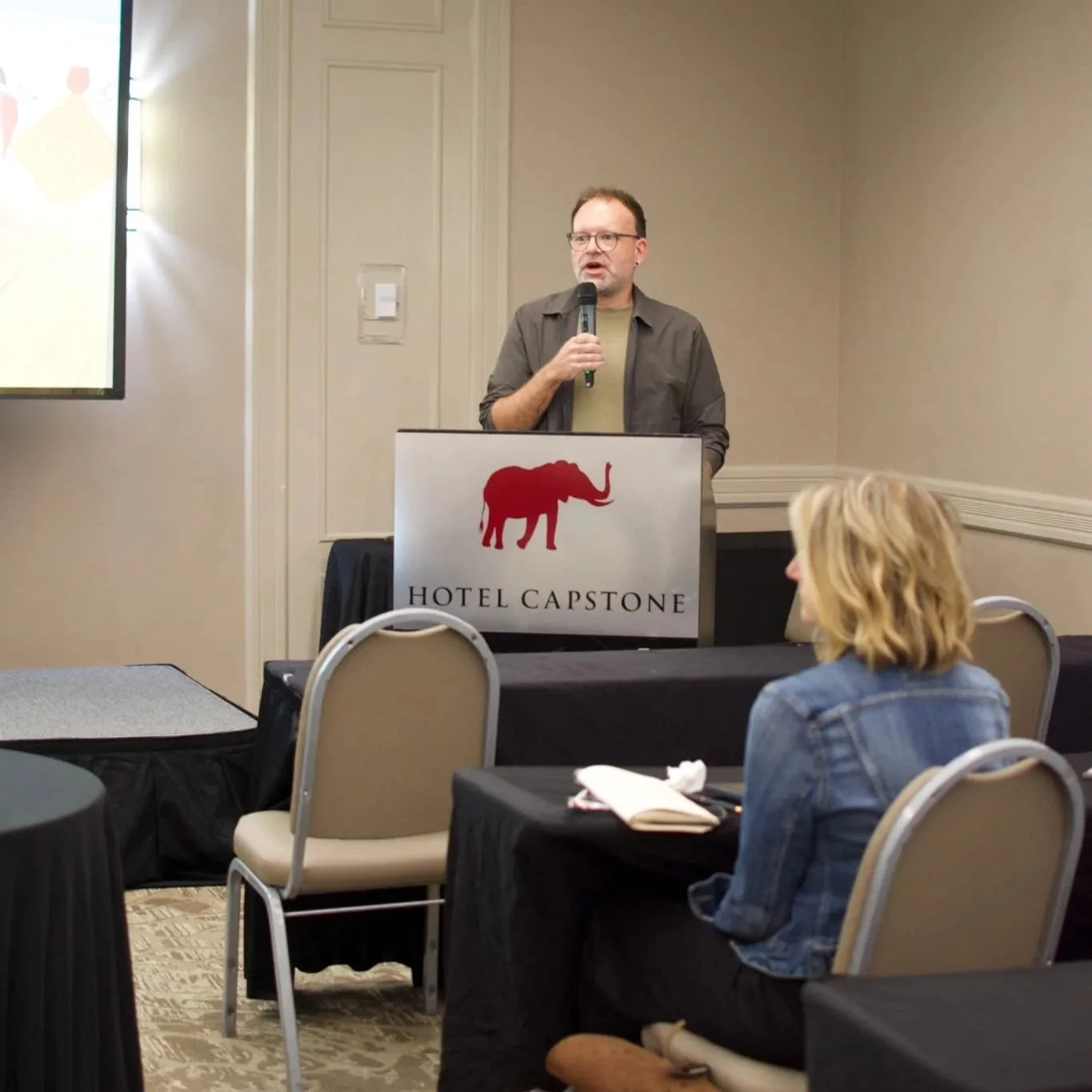
Paul Wolf, Visit Jackson | Photo by Sara LaBorde
Paul Wolf closed with seven principles for storytelling with soul: be relevant, meet people where they are, surprise them, be vulnerable, be in the community, never close a door, and be a good listener who takes action. On the element of surprise, he commented, “We all know a little something that nobody else knows,” so find that angle and communicate it.
Every session of the “PR Roots” conference I attended pointed toward the questions Minder asked the room: What's the story only your organization can tell? And where are your audiences spending their time? How can you meet them there?
Related Articles
Keep reading to see how our monthly newsletter, ELEVATED NEWS, earned an SPRF Lantern Award at this year's conference, and get practical guidance on building a website that helps your podcast reach more listeners.


ELEVATED NEWS, Elevate Next's monthly newsletter, has won a 2026 Lantern Award, the Southern Public Relations Federation's top honor, in the Advertising & Publications category.