Small Business Lessons From Spain's World Cup Win
The 2026 FIFA World Cup broke through a summer of divisive political rhetoric to unite humanity. Media publications noted the World Cup's cohesive effect, reminding us "that loyalty doesn't have to be bound by borders."
The entire globe adopted the Norwegian Viking Row, cheered Cape Verde's astonishing underdog performance, and reveled in the congratulatory hug between Argentina's Lionel Messi and the young Spanish star Lamine Yamal, who was photographed as a baby with Messi nearly 20 years earlier.
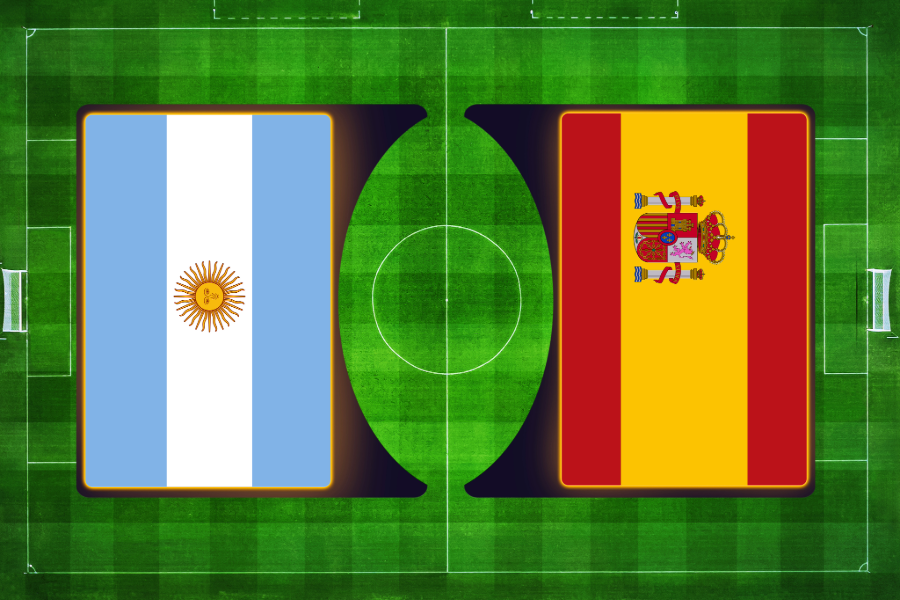
Spain vs. Argentina: The Final Match
Spain's 1-0 win against Argentina, however, distilled the elements of Spain's winning strategy: humility, hard work, teamwork, and unity. El País similarly praised Spain's La Roja team as "an extraordinary group of soccer players who, in a sport of stars and social media divas, have prioritized team values, collective intelligence, and... hard work."
Collective Intelligence Over Individual Brilliance
La Roja's coach, Luis de la Fuente, said,
"I believe the team makes the individual better. Individual talent must always be at the service of the collective, because the collective will make you better, not the other way around."
As an example of this philosophy, The Economist called Spain's Rodrigo Hernández, named the 2026 World Cup's best player, an "unobtrusive" midfielder.
Spain's coordinated, precise defensive strategy prevented a single shot on goal, even against Argentina’s Messi, the greatest player in the sport's history.
Esquire described the Spanish team's approach as "clinical" and, as a result, "deserved to hoist the trophy" in the World Cup final. Great teams, like La Roja, have cultures and systems that overshadow any individual performance.
Unity in Differences
The Spanish team provided the world with an example of national cohesion for a country with fragmented cultural geography. Of La Roja's nine Catalan and three Basque players, two young team members, Lamine Yamal and Nico Williams, are the children of African immigrants from Equatorial Guinea, Morocco, and Ghana. El País argued that Spain's victory was, in fact, a victory for the world.
In a show of sportsmanship, Messi and Yamal congratulated and embraced each other after the game. Yamal later shared what Messi said:
"He told me to keep going my way and that the future belongs to our generation. Those words mean as much to me as the gold medal around my neck."
The pair first met in 2007 when Yamal's mother won a UNICEF-sponsored raffle for a calendar photoshoot with Barcelona's soccer team. Baby Yamal was randomly paired with Messi for the iconic bathtub photo with photographer Joan Monfort. The final World Cup game brought the moment back full circle for the 19-year-old soccer prodigy, whose career has followed in 39-year-old Messi's footsteps.
Sport Mirrors Society
Lamine Yamal "came to represent a broader conversation about identity, heritage and the evolving meaning of national belonging. This was never simply the story of one remarkable footballer. It was the story of a generation."
For a few weeks, none of us required a passport to participate in Norway’s Viking Row, adopt Cape Verde as our second team, or appreciate Telemundo’s enthusiastic, Spanish-language commentators shouting “Goooooooool!” TIME Africa called soccer "the world's most visible stage for belonging."
This summer, at least, the world had front-row seats to cheer not just for their country, but for diverse teams representing the ideals of teamwork, determination, humility, and collective intelligence. Loyalty, it turns out, doesn't have to be bound by borders.
From La Roja to Your Employee Roster
Small business owners can apply the same playbook from La Roja's coach, De la Fuente: the team is more important than the brilliance of the individual high performer.
Gallup's State of the Global Workplace: 2026 Report found that only 20% of employees worldwide are engaged at work, the lowest level since 2020. Small business owners and managers, who account for 70% of the variance in team engagement, must adopt a collective mindset when managing their teams. Engaged teams in the workplace earn their company 10% higher customer loyalty, 18% higher sales productivity, and 23% higher profitability.
With nine Catalans and three Basques, including two sons of African immigrants, Spain’s team didn't win by minimizing those individual differences; it won by building a system that put each player's strengths to work. A small business team built the same way, diverse but aligned around a shared strategy, has the same competitive advantage.
A championship team and a thriving company are solving the same problem. A small business owner's goal is not to find one more star employee, but rather to build a diverse culture and a system that makes the collective more engaged and better performing.